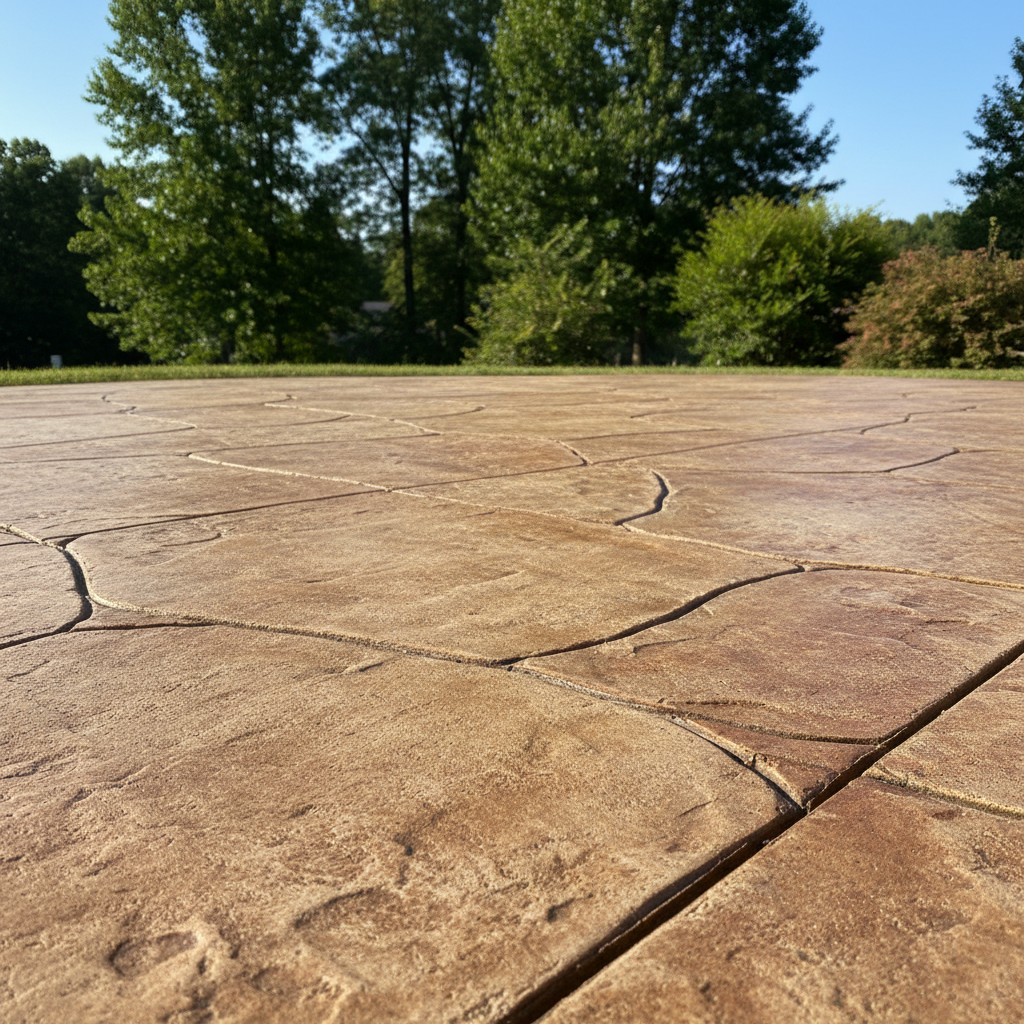
Alright, let's talk concrete. You've got a spot in your yard, maybe it's that old cracked patio, or you want a new pad for a shed. You're probably wondering, can I just do this myself? It's a fair question. Concrete work looks simple enough on the surface – mix, pour, smooth. But trust me, there's a lot more to it than that. I've seen plenty of DIY jobs go sideways, and it usually ends up costing more to fix than if they'd just called someone in the first place.
Before You Even Think About Mixing
First things first: planning. This is where you, the homeowner, can really shine. What are you building? A small stepping stone? A 10x10 patio? A 20x30 driveway? The size and purpose dictate everything. You'll need to think about drainage – especially here in Decatur where we get those heavy summer downpours. You don't want water pooling up against your foundation or running into your neighbor's yard. Figure out your slope. A good rule of thumb is a quarter-inch drop per foot away from any structure.
Next, utility lines. Seriously, call 811 before you dig. It's free, it's the law, and it could save you from a major headache or worse. You don't want to hit a gas line or a water main. Trust me, I've seen it happen. Also, consider access. Can a concrete truck even get to your backyard? If not, you're looking at wheelbarrowing, which is a whole different beast.
For small, non-structural stuff like a little stepping stone path or a small repair, sure, you can probably handle the prep yourself. Digging out a few inches, laying down some gravel, and building a simple form. But for anything bigger than, say, a 4x4 pad, you need to be honest about your skills and your back.
During the Pour: This is Where Pros Earn Their Keep
Okay, so you've prepped your area. Now comes the concrete. This is where most DIYers run into trouble. Concrete isn't like painting a wall; it's a race against the clock. Once it's mixed, you've got a limited window to get it in place, screeded, floated, and finished. And it's heavy. Really heavy. A cubic yard of concrete weighs about 4,000 pounds. That's a lot to move around, especially if you're doing it by hand.
Here's what a professional crew brings to the table:
- The Right Tools: Power buggies, vibrators, power screeds, bull floats, darbies, edgers, groovers – we've got specialized tools for every part of the process. You're not going to buy all that for one small project.
- Experience: We know how concrete behaves in different conditions. Is it a hot, humid day like we often get in July? That concrete is going to set up fast. Cold day? It'll take longer. We adjust the mix and our timing accordingly. We know how to read the concrete.
- Manpower: Pouring concrete is a team sport. You need multiple people working quickly and efficiently to get it right. Trying to do a decent-sized slab by yourself? You're going to be exhausted, and the concrete will probably be setting up before you're done finishing it.
- Proper Finishing: This is crucial for durability and appearance. Getting that smooth, even finish, or adding a broom finish for slip resistance – it takes skill and practice. A poorly finished slab will look bad and won't last as long.
If you're pouring anything larger than a small, non-critical pad, I'm telling you, call Midway Concrete Solutions. We do this every day. We've got the crew, the equipment, and the know-how to get it done right the first time. Trying to save a few bucks by DIYing a major slab often leads to a much more expensive tear-out and redo down the line.
After the Pour: Curing and Care
So, the concrete's down. You're not done yet. Curing is just as important as the pour itself. This is where the concrete gains its strength. You need to keep it moist for at least 7 days, sometimes longer depending on the mix and conditions. That means covering it with plastic sheeting, or using a curing compound, or even just hosing it down periodically. Don't let it dry out too fast, especially in our warm Alabama climate, or you'll end up with cracks.
You can definitely handle the curing part yourself. Just make sure you understand what's needed. Don't drive on it or put heavy loads on it for at least a week, preferably longer for full strength. Most concrete reaches about 70% of its strength in 7 days, but it continues to cure and harden for months.
Look, I'm all for homeowners tackling projects they can handle. But concrete, especially for anything structural or high-traffic, is usually best left to the pros. You want a durable, good-looking result that lasts for decades, not something you'll be patching up in a year or two. Think hard about the scope, your skills, and the potential headaches before you decide to go it alone.