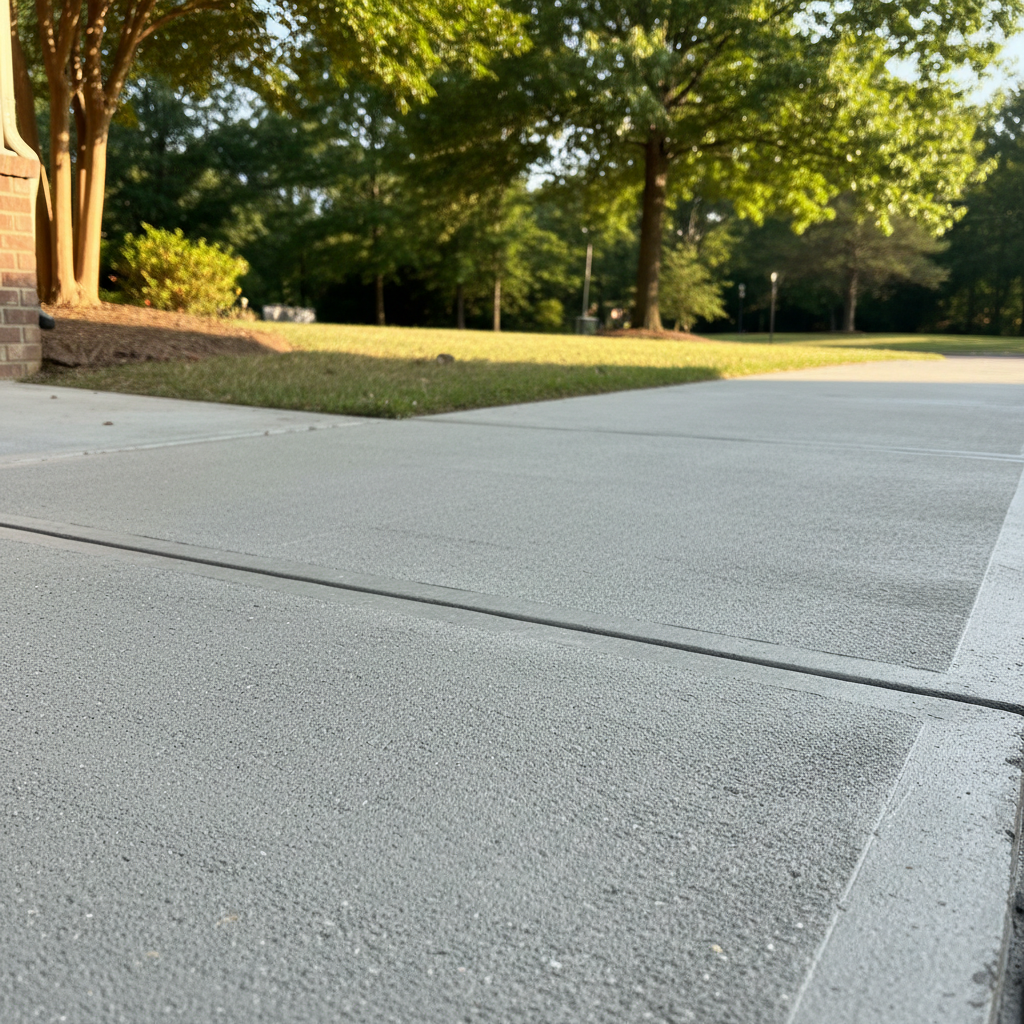
Your concrete sidewalk might seem like a simple thing, right? But honestly, I get a ton of questions about them. People always want to know what's normal, what's a real problem, and what they should actually do about it. So, I figured, why not just put together answers to the top questions I hear from folks right here in Decatur?
What causes cracks in my concrete sidewalk, and are they always a problem?
Cracks are probably the number one thing people ask me about. Look, concrete cracks. It's just a fact of life with the material, plain and simple. It shrinks a little as it cures, and that can cause those tiny hairline cracks. Temperature changes, especially our hot summers and those sudden cold snaps we get here in North Alabama, make concrete expand and contract. That's another big reason for cracking. Tree roots are also a huge culprit, especially in older neighborhoods like those around the Old Decatur Historic District where you've got mature oaks and maples really stretching out.
Now, are they always a problem? Not necessarily. Hairline cracks, especially if they're not getting wider or creating an uneven surface, are usually just cosmetic. They won't compromise the structural integrity. But if you see cracks that are getting wider than, say, a quarter-inch, or if one side of the crack is noticeably higher or lower than the other (hello, trip hazard!), or if you're seeing a spiderweb pattern of cracks all over a section – those are definitely signs of bigger issues. That could mean subgrade settlement, poor drainage, or even a bad mix when it was poured. Those kinds of cracks need some attention, no doubt.
How long should a concrete sidewalk last in Decatur's climate?
A well-installed concrete sidewalk, one done right with proper preparation and good quality materials, should easily last you 20 to 30 years. Some even last longer! What shortens that lifespan? Poor drainage, for starters. If water is constantly sitting on or under your sidewalk, it's going to degrade much faster. Also, our freeze-thaw cycles, while not as extreme as up north, can still do a number on concrete that wasn't properly sealed or mixed. Using too much salt to melt ice in the winter can also damage the surface over time. Good installation, proper curing, and a little maintenance really go a long way towards hitting that 20-30 year mark.
Can I repair a sunken or uneven sidewalk section, or do I need to replace it?
This is a common one, especially with our clay soils around here that love to shift. Often, you don't need to rip out the whole section. For sunken or uneven slabs, especially if it's just one or two panels, concrete lifting – sometimes called 'mudjacking' or 'slabjacking' – is a fantastic option. We pump a material (either a cementitious grout or polyurethane foam) under the slab to raise it back to level. It's much less disruptive and usually a lot cheaper than a full replacement. However, if the concrete is severely cracked, crumbling, or broken into many small pieces, then replacement is probably your best bet. We'll always assess it honestly and tell you what makes the most sense for your situation.
What's the best way to clean my concrete sidewalk and prevent stains?
For general cleaning, a good pressure washing once a year or so works wonders. Just be careful not to use too high a pressure setting, especially on older or more worn concrete; you could etch the surface. For oil stains, a degreaser or even a paste of kitty litter and dish soap can work if you catch it early. Mildew and algae are common here with our humidity. A mix of bleach and water (1 part bleach to 3 parts water) or a specialized concrete cleaner, scrubbed in and rinsed, usually takes care of it.
To prevent stains and extend its life, I always recommend sealing your concrete sidewalk. A good quality penetrating sealer, applied every few years, will help repel water, oil, and other contaminants. It makes cleaning easier and protects against freeze-thaw damage too.
How much does a new concrete sidewalk typically cost per square foot in Decatur?
That's a tough one to give a single number for, honestly, because there are so many variables. It's not just the concrete itself. You've got to consider the prep work: excavation, grading, compacting the subgrade. Then there's the thickness of the slab, whether rebar or wire mesh is needed for reinforcement, and the finish you want. Access to the site, disposal of old concrete if it's a replacement, and the overall size of the job all play a role. Generally, you're looking at anywhere from $8 to $15 per square foot, sometimes more for smaller, more complex jobs or specialized finishes. The best thing to do is get a few quotes from reputable local contractors like us at Midway Concrete Solutions. We'll come out, take a look, and give you a solid, no-surprise estimate.
Do I need a permit to replace or install a new sidewalk in Decatur?
For sidewalks on your private property, like the one leading up to your front door or around your house, you typically don't need a permit from the city of Decatur. However, if you're talking about a sidewalk that's part of the public right-of-way – the one along the street – then yes, you absolutely will need a permit from the city's Public Works Department. They have specific requirements for materials, thickness, and ADA compliance. It's crucial to check with them before starting any work on public sidewalks. A good contractor will handle all that permit stuff for you, or at least guide you through the process.
What's the difference between standard concrete and stamped concrete for sidewalks?
Standard concrete is just that – a plain, smooth, or broom-finished gray surface. It's durable, economical, and gets the job done. Stamped concrete, on the other hand, is a decorative option. While the concrete is still wet, we press patterns into it using large rubber mats. These patterns can mimic brick, stone, slate, wood, or other textures. We can also add color to the concrete mix or apply a color release agent to create a more natural, varied look. It's a fantastic way to add curb appeal and a custom touch to your home.
The main differences are cost and aesthetics. Stamped concrete is more expensive because of the extra labor, materials (colors, release agents, specialized sealers), and tools involved. But it gives you a much more unique and visually appealing sidewalk. Functionally, both are very durable, but stamped concrete does require a bit more attention to sealing to maintain its color and finish.
Hope this clears up some of your questions. If you've got more, don't hesitate to give us a call at Midway Concrete Solutions. We're always happy to talk concrete.